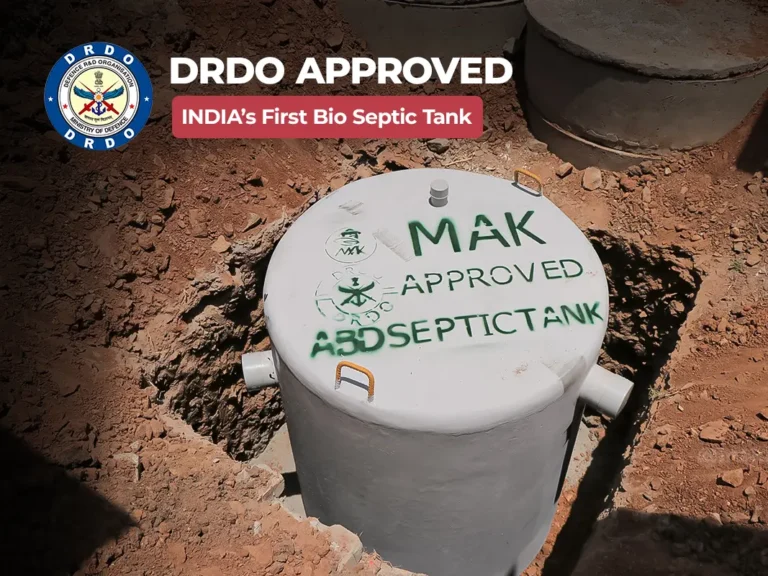
India's #1 ABD Bio Septic Tank manufacturer



In today’s fast-growing residential and rural development, proper wastewater management has become as important as drinking water supply. Many houses still depend on traditional brick septic tanks, but these systems often fail — causing smell, overflow, groundwater contamination, and frequent maintenance.
Because of this, homeowners, builders, and engineers are now shifting towards modern Septic Tank and Precast Septic Tank systems that are scientifically designed, hygienic, and long-lasting.
This article explains everything — working principle, types, benefits, installation, and why modern compact solutions are becoming essential for houses and buildings.
1. What is a Septic Tank?
A Septic Tank is an underground wastewater treatment system used in houses that are not connected to municipal sewage lines.
It collects wastewater from toilets, bathrooms, and kitchens and treats it naturally before releasing it safely into the soil.
Basic Working Process
The treatment happens in 3 stages:
Stage 1 – Separation
Heavy waste settles at the bottom as sludge
Oil & grease float at the top as scum
Stage 2 – Bacterial Treatment
Naturally occurring bacteria break down the organic waste and reduce harmful substances.
Stage 3 – Filtration & Discharge
The treated water flows into soak pit / dispersion area safely.
2. Problems with Old Brick Septic Tanks
Traditional septic tanks were constructed using bricks and cement plaster. These tanks worked earlier when population density was low — but today they create serious environmental problems.
Common Issues
- Frequent overflow
- Bad smell near house
- Groundwater contamination
- Borewell water turning yellow
- Mosquito breeding
- Sludge removal every year
- Cracks & leakage
- Wall collapse after few years
Because of these issues, authorities and engineers now recommend modern engineered tanks instead of site-built tanks.
3. What is a Precast Septic Tank?
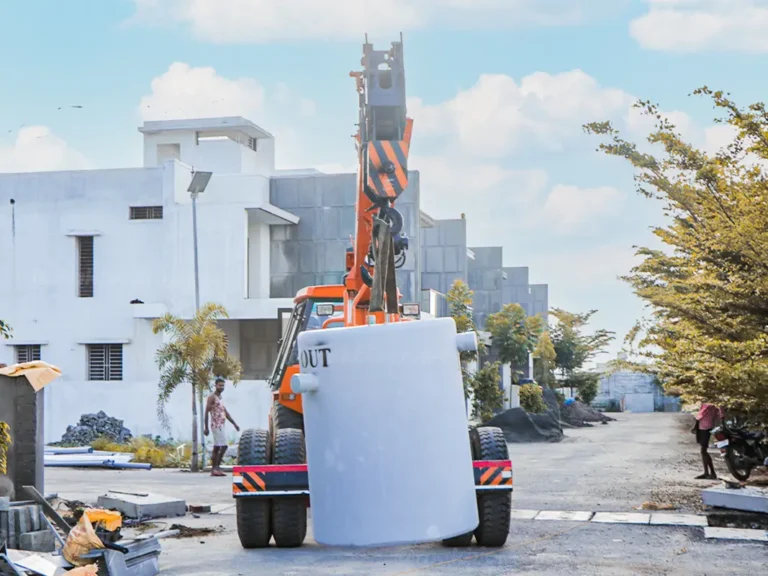
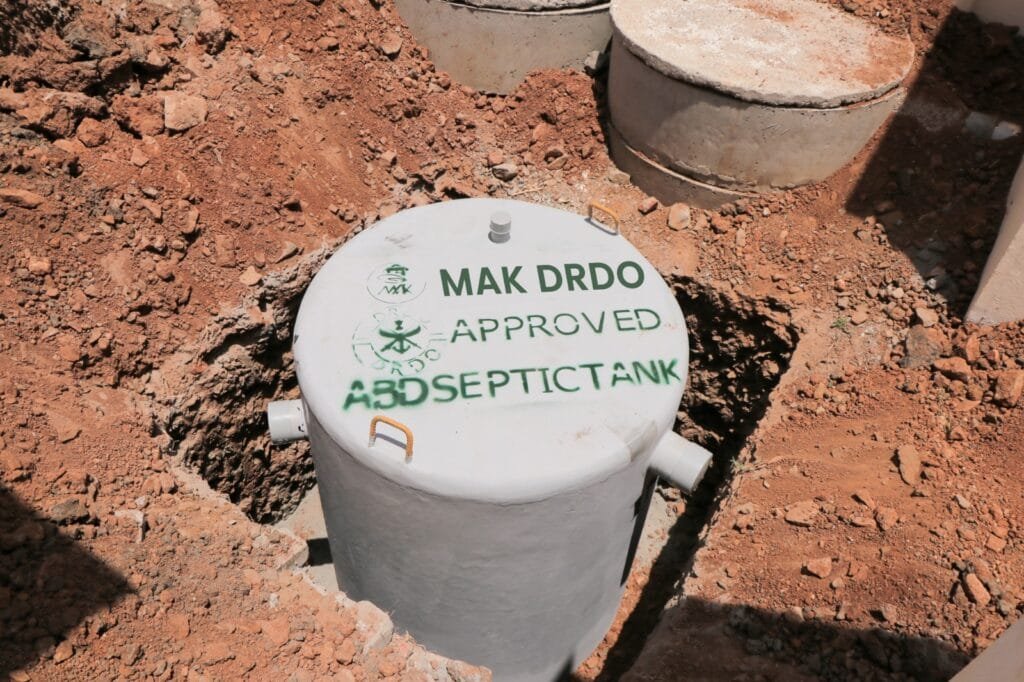
A Precast Septic Tank is a factory-manufactured concrete tank designed using engineering calculations and produced under controlled conditions.
Instead of constructing the tank inside the ground, the complete unit is delivered and installed directly at the site.
Modern companies like MAK India Limited manufacture scientifically designed systems that improve treatment efficiency and eliminate failures found in traditional tanks.
4. Why Precast Tanks Are Better Than Brick Tanks
| Feature | Brick Tank | Precast Septic Tank |
|---|---|---|
| Construction | Manual | Factory engineered |
| Leakage | High | Leak proof |
| Lifetime | 5–8 years | 30+ years |
| Maintenance | Frequent | Minimal |
| Smell | Common | No smell |
| Water Pollution | High risk | Safe |
| Installation Time | 5–7 days | 2–3 hours |
| Structural Strength | Weak | Reinforced concrete |
5. Compact Septic Tank – Modern Need for Small Plots
Today houses are built on smaller land areas. Traditional tanks require large space, making them unsuitable for modern layouts.
This created demand for Compact Septic Tank Manufacturer solutions.
What is a Compact Septic Tank?
A compact septic tank is a scientifically designed smaller tank that provides equal or better treatment efficiency using internal chamber technology.
Suitable For
- Individual houses
- Villas
- Narrow plots
- Renovation homes
- Farm houses
- Rental buildings
Many homeowners now prefer a Ready Made Compact Septic Tank because it saves space and avoids construction mistakes.
6. Government Approved Septic Tank Concept
Environmental authorities recommend engineered systems because untreated sewage contaminates groundwater — the main drinking water source in rural and semi-urban areas.
Hence modern systems are often referred to as a Government Approved Septic Tank, meaning:
- Designed as per sanitation standards
- Prevents water pollution
- Reduces manual scavenging
- Supports Swachh Bharat sanitation goals
- Protects public health
7. Scientific Treatment Inside Modern Tanks
Modern tanks are not just storage chambers — they are treatment units.
Internal Chambers Include
- Sedimentation chamber
- Anaerobic digestion chamber
- Bacterial media chamber
- Clarification zone
This multi-stage treatment ensures wastewater becomes environmentally safe before disposal
8. Installation Process of Precast Septic Tank
One of the biggest advantages is simple installation.
Steps
- Pit excavation
- Sand base leveling
- Tank placement using crane
- Pipe connection
- Backfilling
Total time: 2 to 4 hours
No curing, no plastering, no structural risk.
9. Maintenance Requirements
Traditional tanks require yearly cleaning.
Modern engineered tanks drastically reduce maintenance.
Maintenance Comparison
Old Tank
- Clean every 12 months
- Strong odor
- Expensive labor
Precast Tank
- No Maintenance
- No smell
10. Economic Benefits
Though people think precast tanks cost more, long-term savings are huge.
Cost Savings
- No reconstruction
- No leakage repair
- No yearly cleaning charges
- No water contamination treatment
- Higher property value
So overall lifetime cost becomes significantly lower.
Conclusion
Proper wastewater management is no longer optional — it is essential for public health and environmental safety.
Traditional brick tanks belong to the past.
Modern homes require scientifically designed Septic Tank and Precast Septic Tank systems that are:
- Hygienic
- Durable
- Space-saving
- Pollution-free
- Low maintenance
With increasing urbanization and limited land space, compact engineered solutions are becoming the standard choice for every new house.
Choosing a reliable Compact Septic Tank Manufacturer and installing a Ready Made Compact Septic Tank ensures safety, convenience, and long-term peace of mind.
A well-designed septic system is not just a construction component — it is a protection system for your family’s health and future water resources.